Posts

Showing posts with the label Urban

Fourplex

Image
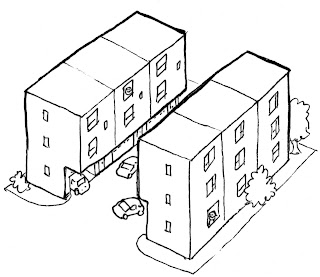
Time period: 1890s-1920s, 1960s-1980s, 2020s to present day Location: Suburbs nationwide The classic US fourplex is a 2-story building with four apartments: two upstairs, two downstairs. First becoming popular when streetcars (also known as trolleys or trams) made suburbs possible, the fourplex offers choice for households who want to get out of the crowded city but can't afford or don't need a standalone house. Cross section of a fourplex . Before streetcars, city dwellers lived within walking distance of the city center. Few people could afford horses, so walking speed limited the physical size of cities. Adults walk at 2-3 miles per hour, which meant the largest ancient and medieval cities were just a couple miles wide. When population grew, cities would grow upwards, replacing houses with townhouses and tenements, 3-7 stories tall, built right next to each other with walls touching. Streetcars were invented in 1887 and could go much faster. Even with time waiting at traffi...
Beachfront Condo

Image
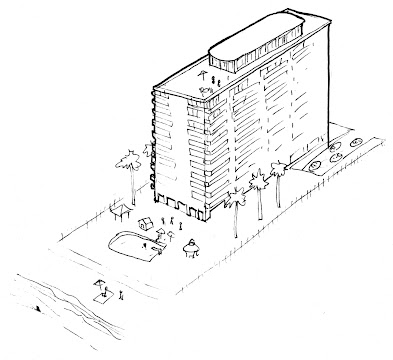
  Time period: 1960s to present Location: Florida, as well as other coastal cities and resort towns Up until the industrial era, beachfront property was not desirable. Unless someone's work required them to live near the ocean, people avoided beaches. There were good reasons: storms, pirates, and other invasions. Most large cities in Europe - even some major ports - are located inland.  This changed with the Industrial Revolution. In England, the rich started going to the beach to get away from pollution in the city, and the beach gained a new image as a healthy place to exercise or recover from disease. By the 1800s beachgoing had spread to the upper class in the US as well, with cities such as Cape May in New Jersey attracting tourists, many of who arrived by boat - Cape May is the closest spot on the shore to Philadelphia by boat. A growing middle class and the construction of railroads led to further development of East Coast beach towns. Most of these beach towns remained...

Slot Homes

Image
Time period: 2010s Location: Denver, especially the neighborhood east of Sloan Lake. Cleveland and other cities with Form Based zoning also have them. Also known as: Sideways-facing town homes or fraux homes (combining the words faux and rowhome) Since the 1990s, Denver has been one of the fastest growing cities in the United States, going from a population of 467,000 to 715,000 over the last 30 years. Many Californians (and others) were attracted by Colorado's lower housing costs, clean air, and access to hiking and other outdoors activities. The tech industry also expanded, bringing lots of high paying jobs. With that came a demand for housing, especially large homes desired by the upper middle class. In 2010, Denver updated its zoning code to a Form Based Code (FBC) to encourage more "missing middle" housing - a range of density between detached houses and large apartment buildings. They were the one of the big cities in the US to use an FBC. The intent was to get rowh...

Student Apartment Tower

Image
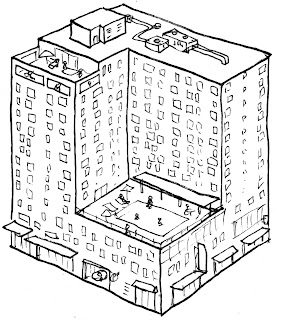
  Time period: 21st century Location: Within walking distance of a flagship state university Large apartments designed to be shared by roommates, plus amenities and retail. If you live in a college town, chances are you've seen a number of large apartment towers pop up on the skyline just outside campus. These massive buildings, the largest of which house over 1,000 students, might be called "luxury student housing" or "student containment blocks" depending on who you ask.  They are the result of a number of trends that started as far back as the 1970s and have converged today.  Unlike other apartments that often end up stuck with vacant retail spaces due to there being too much retail space relative to the number of customers, student housing has a high enough population density to support first floor retail. Dining, cafes, and bubble tea are common retail tenants, so the space should be built kitchen-ready. Enrollment Trends at Public Universities In the USA...

Point Access Block

Image
Time period: Late 19th and early 20th century, revived in 21st century. Location: Used to be everywhere.  Today: Seattle and New York City. A mid-rise building with a couple apartments on each floor.   In most cities, you'll find two types of mid-rise apartment buildings in the 4-7 story range. First, there'll be some small historic buildings downtown, side by side like books on a shelf. These are the original point access blocks. Then, there are the big modern buildings taking up a whole block and with long, windowless hallways inside. These are double loaded corridor buildings. Floorplan of a point access block.   Note that apartments have windows facing the front and back of the building.     In contrast, except for the corner units, apartments in a double loaded corridor only have windows facing one direction. Both the point access block and the double loaded corridor were designed to be the most efficient floorplan given the building codes of th...

Fraternities, Sororities, Co-ops, and Mini-Dorms

Image
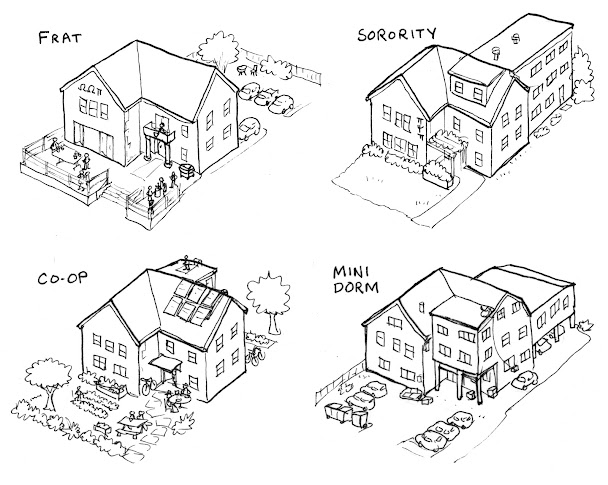
Examples shown are smaller buildings located in urban areas. Group living at suburban and rural colleges have larger yards and more parking. The largest sororities are found in the South, and have over 40,000 square feet of indoor space and are located on 1-acre lots. Time period: Mid/late 1800s to present Location: College towns Four types of student group living, separated by gender or economic system Key features - Located in clusters close to college campuses - Shared common spaces and bathrooms - In addition to residential uses, may also contain study halls and space for parties From the 1600s to the mid 1800s, college education in the United States was rare, limited to small institutions established by churches to train ministers. Liberal arts education was added in the 1800s. Enrollment was small - a couple dozen to a couple hundred students per college. In the mid 1800s, as the country grew and started to industrialize, there was a movement to expand higher education as farmin...

Texas Donut (Wrap)

Image
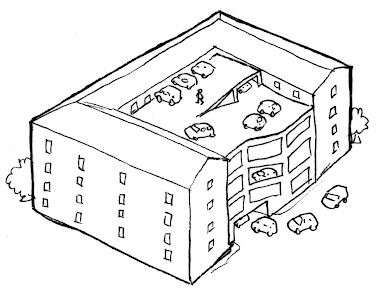
  Time period: Late 20th century to present Location: Suburban downtowns and car-centered cities across the country How to provide lots of apartments, while hiding the parking. Key features - Mid-rise apartment building wrapped around a multi-story parking garage. - Requires large piece of land. - Higher density than garden apartments, less dense than a podium building. Everything's bigger in Texas - including the apartment buildings. After World War II, advances in air conditioning technology made urban living in hot and humid climates more desirable. Texas was also going through an oil boom. While oil fields tapped out and production peaked in the 1970s, the state's early lead in oil production locked in its position as a headquarters for oil companies, as well as banks and suppliers that supported oil drilling elsewhere in the world.  Since the 2010s, the fracking boom has brought a new wave of oil related jobs to Texas. While its main Sunbelt rival - California - went down...